

Chelsea were founded in 1905 and have played at Stamford Bridge throughout their history. Based in West London, the club have become one of the most successful English sides of the modern era, winning major domestic and European trophies. Chelsea were founder members of the Premier League in 1992 and are strongly associated with the Fulham Road, a global fanbase and fierce London rivalries.
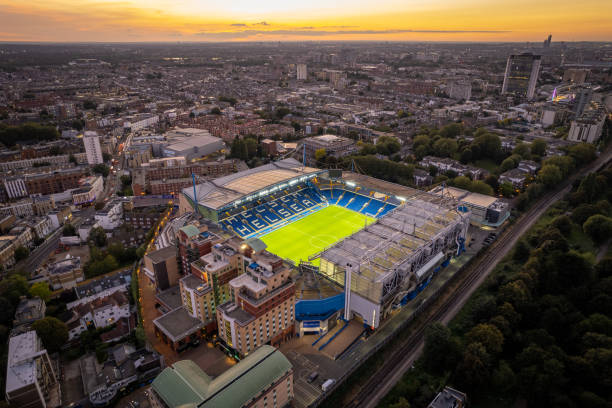
Stamford Bridge is one of the most historic stadiums in London football and has been Chelsea's home for the club's entire existence. It sits on the Fulham Road in west London, built tightly into a dense urban area between Fulham, Earl's Court and West Brompton. The ground has changed dramatically from its old bowl and greyhound-track days, but it still feels very much like a traditional city stadium rather than an out-of-town arena.
The stadium is made up of four main stands: the Matthew Harding Stand, Shed End, East Stand and West Stand. The Matthew Harding Stand is behind the north goal and is one of the main vocal Chelsea areas. The Shed End is behind the opposite goal and includes the away section. The East and West stands run along the sides of the pitch, with the West Stand containing many of the main club and hospitality facilities. The ground is relatively compact for a major Premier League club, which means demand for tickets is high and space around the stadium can feel tight.
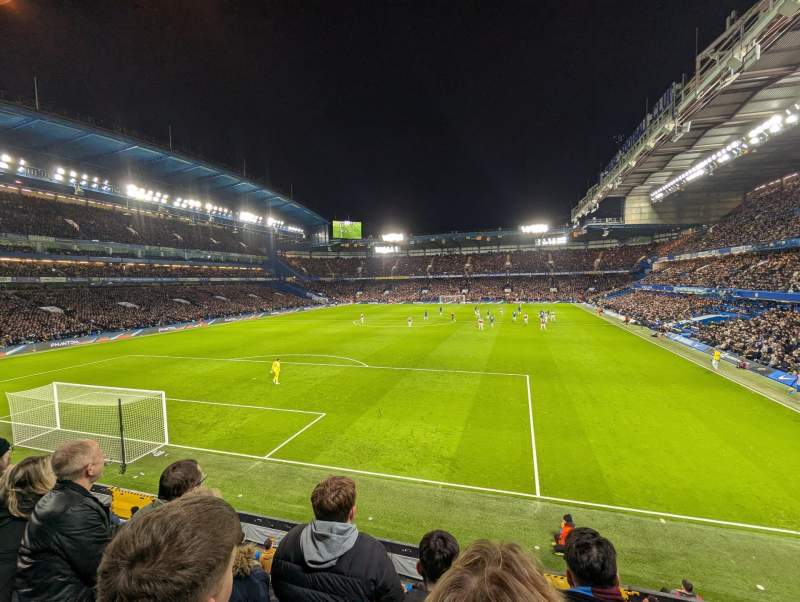
Views vary across Stamford Bridge. Many seats offer good proximity to the pitch, but the older layout means the experience can differ more by stand than at newer grounds. The stadium is known for feeling enclosed when full, especially for evening games and big London fixtures. For neutrals, the East or West Stand side views are normally the best option, while the Matthew Harding and Shed areas are more obviously partisan.

A rivalry dating back to their first meeting in 1909, between Chelsea of West London and Tottenham Hotspur of North London. Spurs considered by many Chelsea fans as their main rivals.
Tottenham HotspurChelseaTottenham Hotspur Stadium, London | Premier League

A west London rivalry given extra spice by periods of league overlap, tight geography and QPR’s desire to upset their bigger neighbour.
No upcoming rivalry fixture currently listed.

A historic rivalry shaped by the brutal 1970 FA Cup final and the contrast between London glamour and Yorkshire defiance.
Away supporters at Stamford Bridge are usually housed in the Shed End, in the south-east corner area of the stadium. For Premier League matches the allocation is normally around the standard league away allocation, with cup competitions sometimes bringing different numbers depending on competition rules and safety arrangements. The away section is close to the pitch and close to home support, so London derbies and high-profile fixtures can be lively.
Visiting supporters should use the away entrances and routes given on their ticket and in their club's travel guidance. Stamford Bridge is in a tight urban setting, so supporters are often channelled through specific streets and entrances rather than simply walking freely around the ground. Fulham Broadway is the closest Underground station, but it becomes extremely busy before and after the match.
The away view is generally decent, though it is a corner/end allocation rather than a full end behind the goal. The concourse can feel tight when the full allocation travels, and queues can build close to kick-off. Away supporters with access needs should check the dedicated Chelsea away accessibility information, as wheelchair and personal-assistant seating is arranged in specific rows and platforms.
From the north, official Chelsea guidance routes drivers towards the M25, then the M4 into London, continuing as the A4 towards Hammersmith before working down towards Fulham Road. Stamford Bridge sits in a dense urban area, so traffic and parking are difficult on matchdays. Driving is best limited to pre-booked parking or accessible arrangements.
From south London, approach via the river crossings towards Fulham, Chelsea or Putney, then use local roads towards Fulham Road. The last mile around Stamford Bridge is slow on matchdays and street parking is heavily restricted. Consider parking outside the area and using the District line or other public transport for the final leg.
From east or central London, routes through the Embankment, King's Road, Fulham Road or the A4 corridor can be used depending on traffic. This is not a stadium where supporters should expect simple matchday parking. Allow for congestion around Earl's Court, Fulham Broadway and Chelsea before and after the match.
From the west, use the M4/A4 towards Hammersmith, then head towards Fulham Road and Stamford Bridge. Chelsea's official driving route uses the M4/A4 approach, but supporters should still expect controlled streets, congestion and limited parking near the ground. Pre-plan parking or use public transport from further west.
Fulham Broadway on the District line is the closest Underground station to Stamford Bridge and the standard route for most Chelsea matchgoers. Arriving from central London usually means changing at Earl's Court for a Wimbledon-bound District line train. The station becomes extremely busy after matches and crowd control is common.
West Brompton is a useful alternative for Stamford Bridge, served by the District line, London Overground and National Rail services. It is around a 15-minute walk to the stadium and can work well for supporters arriving from Clapham Junction, north London Overground routes or those wanting to avoid the worst Fulham Broadway queues.
Earl's Court is a key interchange for supporters heading to Stamford Bridge from the Piccadilly line, District line or west London. Change here for a Wimbledon-bound District line train to Fulham Broadway, or walk from Earl's Court if you prefer to avoid packed platforms. It is especially useful for supporters arriving from Heathrow or King's Cross via the Piccadilly line.
Imperial Wharf is a London Overground and National Rail option south-west of Stamford Bridge. It is not the closest station, but it can be useful for supporters coming via Clapham Junction, Shepherd's Bush, Willesden Junction or the Overground network. The walk to the ground is longer but can be a good alternative when Fulham Broadway is congested.
From Fulham Broadway, leave the station and follow the obvious matchday route along Fulham Road towards Stamford Bridge. The walk normally takes around 5 minutes. After the match, the station is very busy and crowd control is common, so you may prefer West Brompton, Earl's Court or Imperial Wharf.
From West Brompton, walk south along Lillie Road and then towards Fulham Road and Stamford Bridge. The walk is around 15 minutes. It is a good alternative for Overground, District line and National Rail users, especially if Fulham Broadway is heavily queued.
From Earl's Court, either take the District line one stop to Fulham Broadway or walk south-west towards Fulham Road. The walk to Stamford Bridge usually takes around 20 minutes. It is a useful option if you want to avoid the busiest station immediately beside the ground.
From Imperial Wharf, walk north towards Fulham Road and Stamford Bridge. The route usually takes around 20 minutes. It is a practical alternative for supporters arriving via London Overground or Clapham Junction, but check your route beforehand as it is less direct than Fulham Broadway.
Heathrow is usually the most convenient airport for Chelsea. Take the Piccadilly line from Heathrow to Earl's Court, then change onto a Wimbledon-bound District line train to Fulham Broadway for Stamford Bridge. This route is straightforward and avoids crossing London by taxi. If travelling with luggage, allow extra time at Earl's Court and Fulham Broadway because both can be busy around kick-off.
Gatwick works well for Stamford Bridge because trains run into London via Clapham Junction and Victoria. The most useful route is often Gatwick to Clapham Junction, then West Brompton by Overground or National Rail, leaving a walk of around 15 minutes to the stadium. You can also travel via Victoria and the District line to Fulham Broadway, but post-match crowds at Fulham Broadway can be heavy.
London City Airport is a realistic option for Chelsea if your flight route uses it, but the journey involves more changes. Take the DLR from the airport towards Bank or Tower Gateway, then use the Underground towards Earl's Court and Fulham Broadway. It is not the closest airport, but it is viable for European business-style routes and avoids the longer overland transfer from airports further out.
TfL route 14 stops close to Stamford Bridge, including around Fulham Road / Chelsea Football Club. It is useful from central London, South Kensington, Fulham Broadway and Putney-side routes. Traffic on Fulham Road is heavy on matchdays, so it is often better for arrival than a quick post-match exit.
TfL route 211 also serves the Stamford Bridge / Fulham Road area and is useful from Hammersmith, Fulham Broadway, Chelsea and Waterloo-side journeys. It gives a good alternative if the District line is crowded, but expect delays near the ground.
Routes 11 and 22 stop close to the Chelsea / Fulham area and can be useful if you are walking in from King's Road or nearby west London locations. They are not always the quickest choice, but they work well for supporters staying locally.
Addison Lee is a useful pre-booked taxi option for Stamford Bridge, especially from Heathrow, west London hotels or central London. Arrange pick-up away from Fulham Road immediately after the match because traffic and crowd control around Stamford Bridge can make close pick-ups difficult.
There is no normal public stadium parking at Stamford Bridge and the streets around Fulham Road are heavily restricted. The best driving option is to pre-book a private or commercial space in Fulham, Chelsea or West Brompton, then walk to the ground. Check road closures carefully because some car parks close access before kick-off and for a period after full-time.
Parking around Imperial Wharf or Chelsea Harbour can be viable if pre-booked and if you are happy with a longer walk to Stamford Bridge. This approach keeps you away from the tightest Fulham Broadway crowding and may be useful for supporters coming from the south-west side of London. Always check access restrictions and event-day tariffs.
Westfield London can work as a park-and-ride style option for Chelsea. Park at Westfield, then use the Overground or Underground network towards West Brompton, Earl's Court or Fulham Broadway. It is not close to Stamford Bridge, but it avoids the worst local parking restrictions and is often a better plan than trying to park near Fulham Road.
Earl’s Court pub often used by visiting supporters because Chelsea advise away fans that the nearest welcoming pubs are generally in the Earl’s Court area rather than right next to Stamford Bridge.
Large Earl’s Court pub and a practical away-fan option before Chelsea matches. It is further from the stadium but avoids some of the tighter Fulham Road pub restrictions.
Well-known Parsons Green pub around a 15-20 minute walk from Stamford Bridge. It is a useful food and drink option, though away colours and entry can vary by fixture.
Historic pub and food option close to Stamford Bridge. Very convenient for the ground, but matchday crowding and door policy can vary, so arrive early.
Burger restaurant option around Fulham Broadway, useful before walking to Stamford Bridge. The area gets busy quickly on Chelsea matchdays.
Large Earl’s Court pub serving food and drinks, useful because away supporters are often directed towards the Earl’s Court area rather than the immediate Stamford Bridge pubs.
The most obvious hotel for Stamford Bridge, located at the stadium complex. Very convenient for Chelsea matches, but matchday prices and availability can be high.
Large hotel near West Brompton and Earl’s Court, a useful base for Chelsea away fans because the area is often more practical for visitors than staying immediately by Stamford Bridge.
Earl’s Court hotel useful for supporters who want Underground access, food and pubs before walking or travelling to Stamford Bridge.
For Stamford Bridge, public transport is strongly recommended. Fulham Broadway on the District line is the closest Underground station, with West Brompton, Earl's Court and Imperial Wharf also usable depending on the route. After the match, Fulham Broadway can be very slow, so it is often worth walking to an alternative station if you are able to do so.
The stadium sits in a busy residential and commercial part of west London, so parking close to the ground is extremely limited and road closures or parking controls are common. Arriving early is sensible, especially now that digital ticketing, security checks and bag checks can all add time at the turnstiles. Do not leave entry until the last few minutes for major fixtures.
Away fans should be careful around home pubs and should follow the visiting club's advice on where to drink. Stamford Bridge is close to plenty of bars and restaurants, but many are home-orientated or operate door policies on matchdays. For a first visit, it is worth allowing time to find the correct stand and entrance because the stadium footprint is tight and not every route around the ground is available to away supporters.
Chelsea home tickets are sold through the club's official ticketing channels, with priority normally given to season-ticket holders, members and supporters with the right level of booking history. Premier League tickets at Stamford Bridge are rarely straightforward for casual visitors, particularly for London derbies, European qualification rivals and high-profile weekend matches.
For neutrals, the East Stand or West Stand generally offer the best balance of view, comfort and matchday experience. The Matthew Harding Stand is one of the strongest home atmosphere areas, while the Shed End has both home and away support and can be lively. Seats next to the away section are not the best choice for someone wanting a quieter first visit.
Away tickets are sold by the visiting club and should be bought only through official away-ticket routes. Chelsea enforce segregation, and supporters identified as away fans in home areas can be refused entry or removed. Supporters should also make sure digital tickets are downloaded and working before travelling, as Stamford Bridge has moved strongly towards digital match access.
Stamford Bridge applies standard Premier League ground regulations and Chelsea's own safety and security rules. Supporters should expect bag searches, ticket checks and stewarding around all entrances. Pyrotechnics, weapons, pitch encroachment, discriminatory behaviour and alcohol in view of the pitch are prohibited.
Chelsea publish a specific prohibited-items list. Bags larger than A4 size are not permitted, and items such as prams, large-lens cameras, glass bottles, cans, smoking devices and vapes are not allowed inside the stadium. Supporters should travel light, because bringing the wrong items can lead to delays or refusal of entry.
The stadium is fully segregated on matchdays. Home and away supporters should use only their allocated entrances and sections. Ticket touting, misuse of tickets, or away supporters entering home areas can result in ejection and further action by the club.
Chelsea provide detailed accessibility information for Stamford Bridge, including accessible ticketing, entrances, seating plans, accessible toilets, transport advice and parking information. Supporters with access requirements should contact the club's access team in advance, particularly for wheelchair spaces, personal-assistant tickets or specific seating needs.
For away supporters, Chelsea publish separate away-accessibility guidance. Wheelchair-user spaces are located on raised platforms in specific rows of the away section, with personal-assistant seats either next to or directly behind the wheelchair position depending on the row. This means away disabled supporters should check exact row and seat details before travelling.
The stadium tour and museum also have accessibility guidance, including lift access to the museum and ramped sections on the tour route. The approach to the museum includes a gradual slope and some uneven surfaces, so visitors with mobility needs should check the latest guidance before booking.
Chelsea offer regular Stamford Bridge stadium tours and museum visits. The standard stadium tour usually takes visitors through areas such as the dressing rooms, players' tunnel, pitchside, press areas and the Chelsea museum, subject to matchday and operational restrictions. The club also offers group tours, classic tours and special tour formats.
Tours should be booked through Chelsea's official website. The regular stadium tour is advertised as lasting around 60 minutes, with departures at regular intervals on normal operating days, while longer or specialist tours may run at set times. Tour access can be restricted around matchdays, events or stadium works, so visitors should always check opening times before travelling.
Chelsea’s stadium tour and museum is the obvious football attraction at Stamford Bridge. Check availability and matchday restrictions before booking.
Major London museum in South Kensington, a short Underground or bus ride from Stamford Bridge. Good for away fans making a full day in West London.
Famous Chelsea shopping and food street near Stamford Bridge. Useful before or after the match if you want to stay local.
Official Chelsea ticketing page for match tickets, membership sales, hospitality, accessibility information and fixture-specific ticket updates.
Official website for Chelsea. Useful for tickets, travel updates, accessibility information, stadium rules and matchday announcements.
Useful starting point for information about Stamford Bridge, including visitor details, stadium facilities and matchday guidance where available.